Why do some teams almost always able to deliver excellent results, while others seem stuck following orders that make less sense, even when a better plan is obvious? Why do some organizations punish people for reporting mistakes instead of fixing them?
These questions in general points out to one root cause: organizational culture.
There’s actually a way to measure your organization’s culture, and one of the most useful tools is the Westrum model. Based on this framework, organizations tend to fall into one of three types:
- Pathological (power-oriented) organizations are characterized by large amounts of fear and threat. People often hoard information or withhold it for political reasons, or distort it to make themselves look better.
- Bureaucratic (rule-oriented) organizations protect departments. Those in the department want to maintain their “turf,” insist on their own rules, and generally do things by the book—their book.
- Generative (performance-oriented) organizations focus on the mission. How do we accomplish our goal? Everything is subordinated to good performance, to doing what we are supposed to do.
These three culture types leads to some very different outcomes, as we can see on the table here:
| Pathological (Power-Oriented) | Bureaucratic (Rule-Oriented) | Generative (Performance-Oriented) |
|---|---|---|
| Low cooperation | Modest cooperation | High cooperation |
| Messengers “shot” | Messengers neglected | Messengers trained |
| Responsibilities shirked | Narrow responsibilities | Risks are shared |
| Bridging discouraged | Bridging tolerated | Bridging encouraged |
| Failure leads to scapegoating | Failure leads to justice | Failure leads to inquiry |
| Novelty crushed | Novelty leads to problems | Novelty implemented |
In any organization, trust is the most valuable asset. A pathological culture destroys trust, people hide information, avoid accountability (as they can be easily blamed if something goes wrong), and the entire system becomes slow and inefficient. Worst of all, when problems are discovered, the messenger is punished. Over time, these buried issues become time bombs.
Bureaucracy create a tribe within a tribe, while having tribe that defend it’s own team sometime a good idea as some other group in organization may be too pushy and prioritizing or delegating the less-impactful project to the whole organization.
A bureaucratic culture is better, but it has flaw. It creates tribes within the organization. Sometimes these silos help defend the team from external pressure, but sometime they simply slow down progress and dilute impact because each tribe may have their own vision of what “success” is.
The ideal is a generative culture. Here, mistakes are acknowledged and resolved. Ideas flow freely, and feedback too. Whether praise or criticism, both are shared constructively. Teams are empowered to prioritize projects that bring the most value, even if it means stopping work mid-way. In this culture, change isn’t scary. Because growth doesn’t come from blindly following rules or avoiding blame. It comes from thinking objectively, solving problems together, and continuously improving.
This likert quessionaire may help you reflect on your own organization to find out on what culture is your organization running on.
To help reflect on your team’s current culture, I’ve included a Likert-style questionnaire based on the Westrum model. Try it out and see where your organization stands.
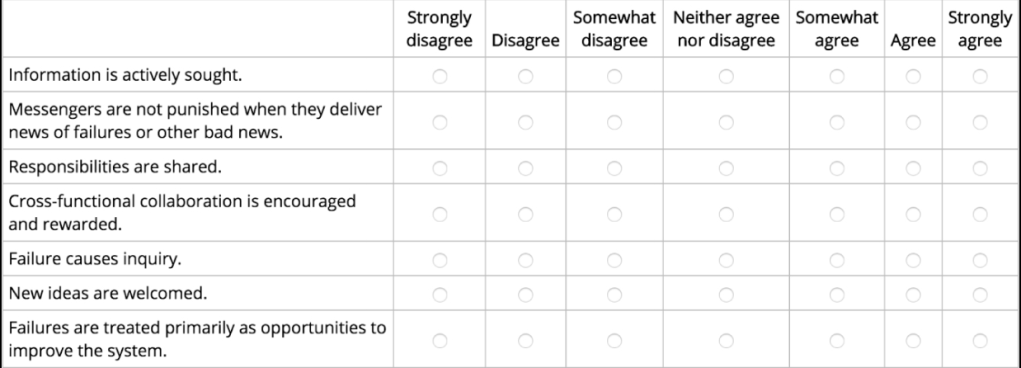
Results may vary depending on which “tribe” you interact with, but share your thoughts in the comment, I’d love to hear!





 Renaldi Adrian
Leave a comment