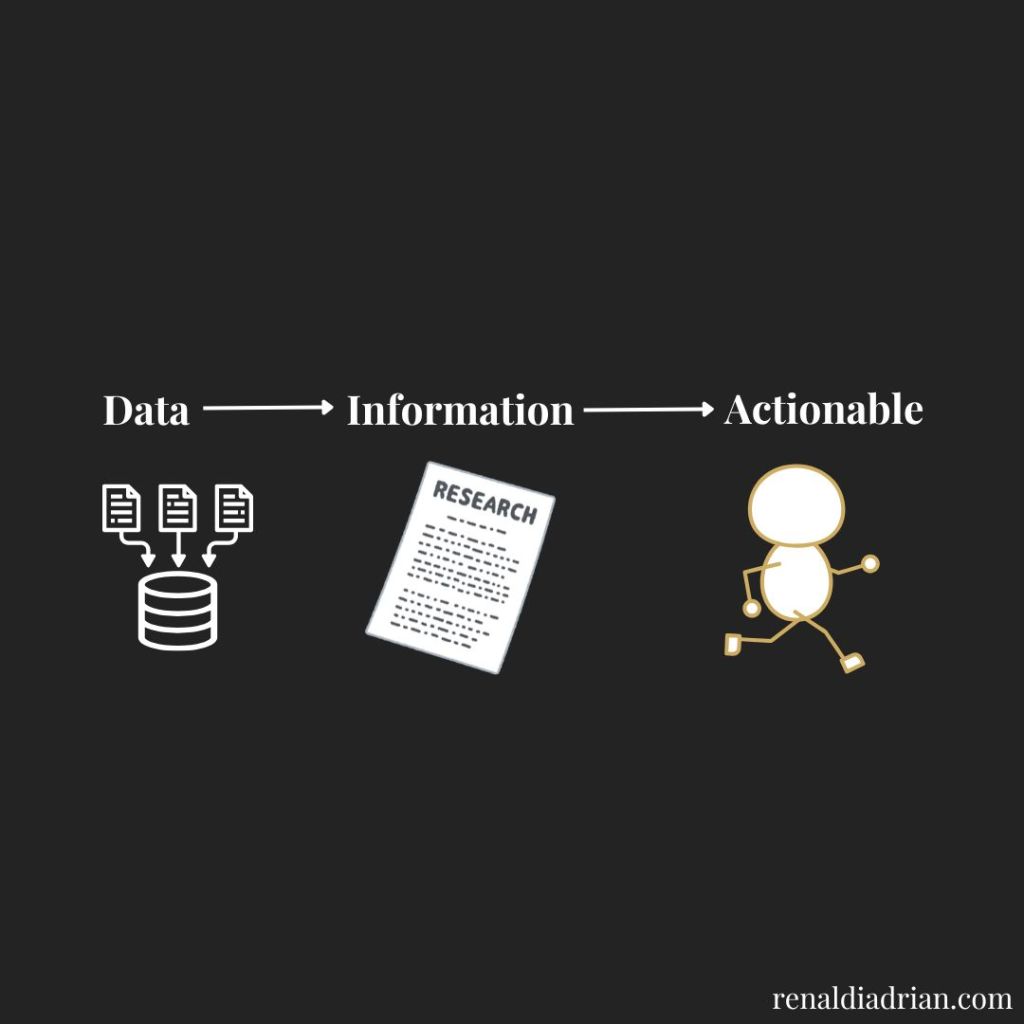
The Problem: Summarizing vs. Analyzing
In my experience, when developing an idea for a feature or an app, there’s often data that support the decision, because sometimes, the idea comes first, and I search for data to support it—or challenge it. Other times, the idea doesn’t exist at all; it comes from analyzing the data itself. But what does it mean to analyze data effectively? And how can we move beyond mere summaries to find actionable insights?
One common pitfall is treating data analysis as a mere summary. In my experience, when people are faced with overwhelming amounts of data, they tend to fall into the trap of simply summarizing it. For example, you might notice that revenue was strong in Q1, but then “What can we do with this information?”, the data remains just that—information, not insight.
The Solution: Finding Actionable Insights
The key to gaining actionable insights from data isn’t just about summarizing it. If all you do is summarize the data, what you’ll end up with is information—not actionable insight. Summarizing tells you what happened, but actionable insights tell you what to do next.
To illustrate this, let’s use data below. I’ve translated some terms for clarity.
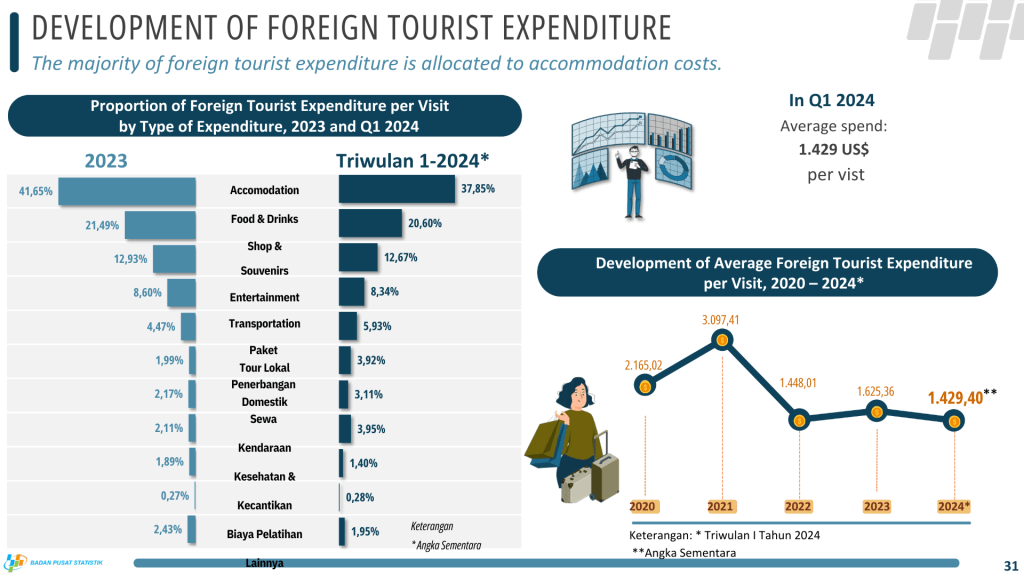
Actionable insights come from starting with a clear objective. Before analyzing into the data, ask yourself: What do I want to achieve? For example, using the data from our example above, let’s say my objective is to increase the average spend to over $1,500. By focusing on this goal, I can analyze the data strategically and identify specific actions to take.
To identify key insights, I started with the Proportion of Foreign Tourist Expenditure per Visit by Type of Expenditure chart on the left side of the image. Among the 13 categories, the top two stood out the most, accounting for 50% of the total spending. This immediately reminded me of the Pareto Principle, where 20% of the inputs often drive 80% of the outcomes. By focusing on these top-performing categories, I could prioritize efforts to maximize impact
After I discovered that Accommodation and Food & Drinks account for the majority of spending, I could prioritize strategies to enhance productivity and allocate more resources and investment to these two key areas. (Note: This is a hypothetical example—I don’t work in the government.)
From the example above, here’s the difference between actionable insights and mere summarization:
The Actionable Approach:
- Start with no clear idea.
- Analyze the existing data.
- Define a goal: In this example is to increase the average spend of tourists.
- Identify actionable insights: In this example is to invest more in the two key areas driving the most revenue.
- Result: A plan and a goal to achieve.
The Summarization Approach:
- Start with no clear idea.
- Analyze the existing data.
- Summarize the data.
- Result: No goal, no actionable steps, and no progress.
Identifying the main objective isn’t always easy, but here’s my personal tip: focus on the most impactful action you can take within your locus of control. This ensures your efforts are both meaningful and achievable.
Feel free to reply or if you have different opinion, I’ll be happy to see your prespective regarding this topic—I respond to everyone







 Renaldi Adrian
Leave a comment